
Why Your Back Pain Starts With Softening, Not Strengthening
Jun 19, 2026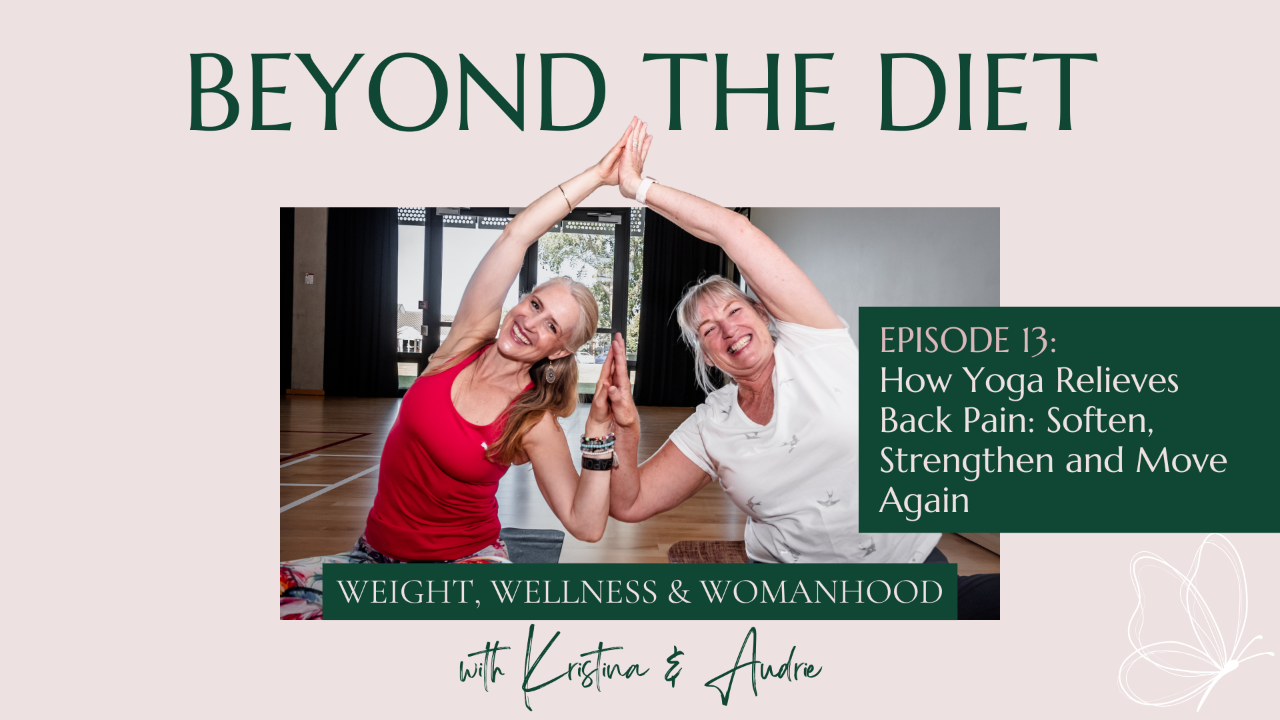
Back pain is the leading reason people visit their doctor. It's also one of the leading reasons people end up on long-term prescription medication. In America alone, close to sixty percent of the population are on some form of pain relief. When Dr. Wayne Dyer quoted that statistic years ago, he asked: what is it about living in America that's so painful for so many people?
It's a question worth sitting with.
Because for many of us, the pain in our lower back isn't simply about a structural problem. Fifty percent of people with herniated discs live in chronic pain. But fifty percent of people with herniated discs feel nothing at all. And equally, half of people with completely normal spines still hurt every single day. So if pain doesn't reliably correlate with damage, something else is going on.
Often, it's tension. Holding on. Bracing. Muscle gripping that the nervous system has learned to do as a protective response, and then forgotten to switch off.
That's where yoga comes in. Not the sweaty, ambitious kind. The kind that actually asks you to slow down, breathe into the places that hurt, and learn to soften.
In our Yoga to Transform Back Pain course, we follow a four-week framework that takes you from pain relief through to sustainable strength and movement. Here's how it works.
Week One: Soften to Release the Pain
The very first principle of Anusara yoga is pause, soften and feel. In a world that treats every problem as something to be attacked and fixed, this feels almost radical. But it's also what your body actually needs.
There are a few things that make softening easier. Magnesium is one of them. Most New Zealanders are deficient because our soil is low in it, and magnesium is essential for the relaxation phase of muscle contraction. A supplement taken consistently for a month makes a real difference, both for sleep and for muscular tension. Turmeric and ginger teas, cherry tart tea, and other antioxidant-rich drinks also support the body's ability to regulate inflammation.
Then there's the muscle release ball. I discovered these through yoga teacher Donna Fahe, and I cannot recommend them enough. You can find them at mymrball.com. The ball is kept quite soft, almost flat, so that it works gently into the tissue rather than creating more bracing. You can lie on your back and place it under the sacrum for seven minutes, just focusing on your breath. Or lie on your front to release the psoas, the long muscle that runs from your groin all the way up to your back ribs and gets chronically tight when we're sitting, stressed, or guarding against pain.
Seven minutes either side of a psoas release, practised consistently over a few weeks, genuinely changed my relationship with the sciatica I developed after carrying both my children on my right hip for years. My son just turned eighteen. I still do this work.
If you don't have a muscle release ball, a rolled towel placed under the sacrum works beautifully too.
Week Two: Building Core Strength
Here's what most people don't know about the core: the muscles you're working at the gym, the visible ones at the front, are not the primary stabilisers of the lower back. The real core has four components: the diaphragm at the top, the perineum at the base, the erector spinae at the back, and the abdominals at the front. But specifically the transverse abdominus, the deepest layer of the abdominals, is what creates genuine spinal stability.
Yoga builds this in a way that gym work often doesn't, because yoga asks you to maintain awareness of internal actions while moving. Taking the thighs back. Lifting the pubic bone to navel. Hugging the shins in toward the midline. These aren't just poses. They're instructions for how to inhabit the body.
A simple starting exercise: lie on your back with your feet resting on a bolster or a stack of cushions, a block or firm pillow between your thighs. Squeeze the block in, take the thighs back, and lift the pubic bone gently toward the navel. You'll feel the deep abdominals engage almost immediately. Hold, breathe, and release. Then, when you're ready, lift the knees and tap the heels down one at a time, keeping all of those actions.
That's it. That's enough to start.
Week Three: Movement and Alignment
Bodies are built to move, but when we're in pain, we grip and go still. Stillness compounds the problem.
One of the most important things I can tell you about back pain and alignment is this: the legs are the governors of the lower back. When the thigh bones sit correctly in the hip sockets, with the thighs drawn back into the back plane of the body, the lower back can find its natural curve. When the thighs drift forward, as most of us allow them to all day when sitting at a desk or driving, the lower back flattens, the core switches off, and the tension builds.
The adjustment is almost embarrassingly simple. You can do it right now, whether you're sitting or standing. Take your right hand to the inner edge of your left thigh and gently twist the flesh back and out to broaden your seat bones. Then do the other side. Sit now on your sitting bones with the thighs turned slightly in and back. Notice the curve returning to your lower back.
That's yoga. No mat required.
Hamstring tightness also contributes significantly to lower back pain. A strap or a belt looped around the ball of the foot, lying on your back and working the leg toward straight while pressing the opposite thigh down into the mat, is one of the most effective daily practices you can build.
Week Four: Bringing Joy Back
This is the piece that rarely gets talked about in back pain conversations. When we're in pain, we stop doing the things that bring us pleasure. We stop moving, stop playing, stop participating in life. And that withdrawal makes the pain worse, both physically and emotionally.
Humans move either toward pleasure or away from pain. When pain is constant, neither of those motivators works the way it should. So we deliberately bring joy back into movement by making it playful. Fun. Worth doing not just because it will help the back, but because it feels good to be in a body that's alive and moving.
When you're in a place of joy, you genuinely cannot be in a place of pain.
A Practice to Come Back To
If you want to end your day with something restorative, set up a chair beside your mat and lie on your back with your calves resting on the chair seat. Your hips should be close enough to the chair that the back of the knees rest comfortably, with the legs roughly at a right angle. Lie here, palms open to the ceiling, and breathe.
You can stay for seven minutes. You can stay for fifteen. Breathe into the places where you hold tension, and with every exhalation, let the muscles soften a little more over the brightness of who you are.
This is not a quick fix. It's a practice. But a practice you can return to every single day, in your own home, without any equipment beyond a chair and a few cushions, is a practice that can genuinely change your life.
If you'd like to go deeper, our Yoga to Transform Back Pain course takes you through all four weeks with guided video practices. You can find out more at yogatotransform.co.nz.
With love,
Kristina
If you would like to know more about our services including our courses, workshops, coaching or retreats then click here
Stay connected with news and updates!
Join our mailing list to receive the latest news and updates from us as we release new blogs and services.
