
Ahimsa: why the yoga mat is where non-violence begins
Jul 31, 2026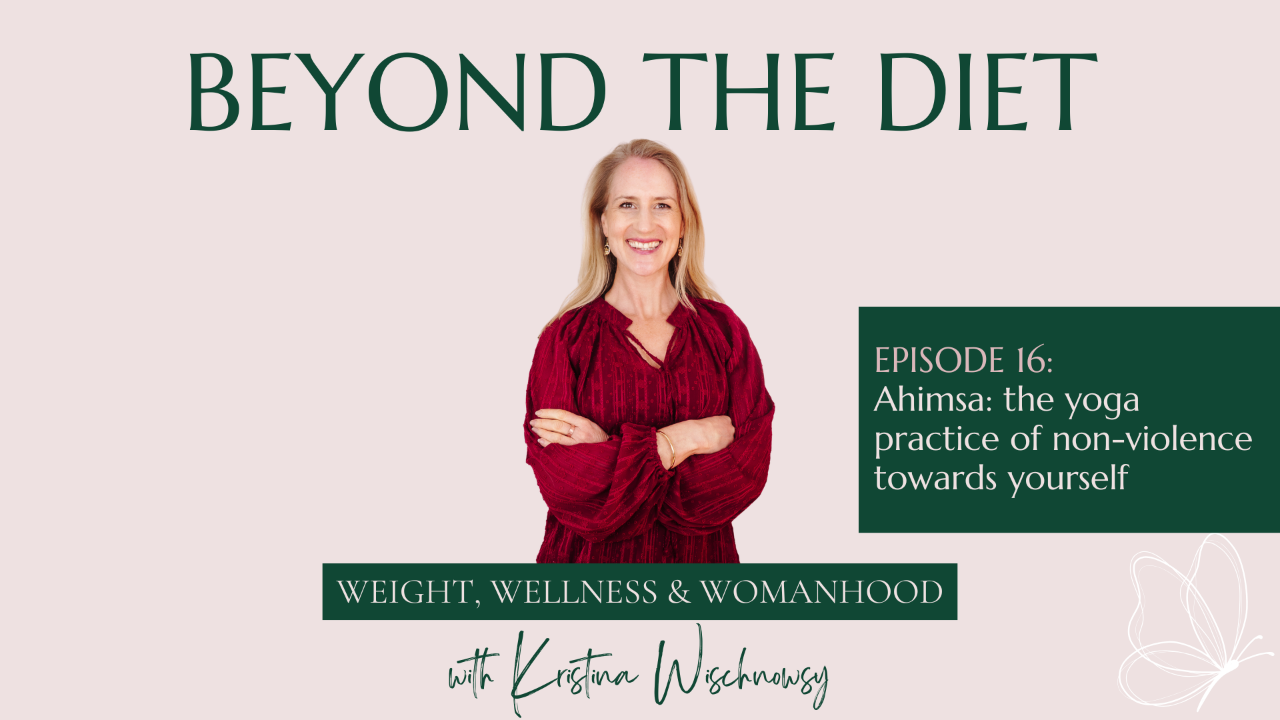
You are in tree pose and your standing leg is shaking. The woman on the mat beside you is holding hers perfectly still. And somewhere underneath your breath, a voice says you should be further along than this by now.
That voice is not neutral. It is not just feedback. In yoga philosophy, that quiet self-judgement is actually a form of harm, and it has a name.
Ahimsa.
It is the first of the yamas, the moral disciplines Patanjali sets out in the Yoga Sutras as part of the eight limbs of yoga. Sutra 2.35 puts it plainly: in the presence of one firmly established in non-violence, all hostilities cease. Gandhi built a movement for Indian independence on this single principle. Mother Teresa is said to have driven an ambulance straight through a battle zone, and both sides laid down their weapons as she passed. That is the scale ahimsa is talking about.
But most of us are not stopping wars. Most of us are standing on a yoga mat, or standing on the bathroom scale, quietly being unkind to ourselves in a hundred small ways we barely notice.
It is about intention, not just impact
Ahimsa is often translated simply as non-violence, but that undersells it. It is not only about the big, obvious harms. It is about the intention behind our thoughts, our words and our actions, in that order.
You can say something plainly, without cruelty in your heart, and still have it land hard on someone else. That is not the same as setting out to wound them. Ahimsa asks us to look at the intention first, because that is the thing we actually have control over.
And the place most of us fail this test is not in how we treat other people. It is in how we treat ourselves.
The violence we do on the mat
Think about what actually runs through your head in a yoga class. Why can't I hold this longer. Why is my body not as open as hers. I should be further along by now.
That internal commentary is ahimsa's opposite. Pushing yourself past your own limits, judging where you currently are, comparing your practice to someone else's, these are all small acts of violence against your own body. Practising within your own limitations, as uninteresting as that sounds, is actually one of the clearest expressions of ahimsa there is.
It extends past the mat too. What you watch, what you read, who you spend your time with, what you eat. There are foods you already know will give you a backlash the next day, and eating them anyway is its own quiet act of self-harm. Same with the extra glass of wine and the headache that follows. Ahimsa asks you to notice what you are taking in and what it costs you.
Why your thoughts are not neutral either
Here is the part that surprises people. Negative thinking is not just unpleasant. It has a physical cost.
When you think or speak in a harmful way, even just to yourself, your sympathetic nervous system responds as though you are under threat. Cortisol and adrenaline rise. Immunity drops. You become more susceptible to pain, physical and emotional both. Loving and harmonious thoughts do the opposite, releasing dopamine and strengthening the immune system. There is research showing optimistic, kind and compassionate patients recover faster from injury and illness, and tend to live longer, than pessimistic ones.
And happiness itself is contagious. If a close friend is happy, you are 25% more likely to be happy yourself. Even a neighbour or an acquaintance you barely know can lift your happiness by 6% just by being happy near you. Who you surround yourself with is not a small decision.
Karma is a groove, not a punishment
There is a common misunderstanding that karma means payback, that harmful action comes back to bite you. From a tantric perspective, it works differently. Every harmful thought, word or action you repeat carves a deeper groove into a habit you keep living inside, until you consciously choose to step out of it. It is not divine punishment. It is momentum. Your attitude either frees you from that groove or keeps you walking the same path inside it.
The reverse is just as true. Choose loving, kind, compassionate thoughts consistently enough, and you start carving a new groove instead.
Coming back to the mat
So you are in tree pose again, leg shaking, and the voice starts up. You should be further along.
This time, notice it. Notice that the voice is not fact, it is a habit, a groove you have practised for years without realising it. And you get to choose whether to keep deepening it or start carving a new one, one kinder thought at a time.
That is ahimsa. Not grand gestures of peace between warring nations, though it can be that too. More often, it is the quiet decision to stop being cruel to yourself in the small, daily ways nobody else ever sees.
We go deeper into this, including a loving-kindness meditation you can do at home, in this week's episode of Beyond the Diet. Have a listen, and come find us on the mat at Yoga to Transform in Christchurch.
If you would like to know more about our services including our courses, workshops, coaching or retreats then click here
Stay connected with news and updates!
Join our mailing list to receive the latest news and updates from us as we release new blogs and services.
